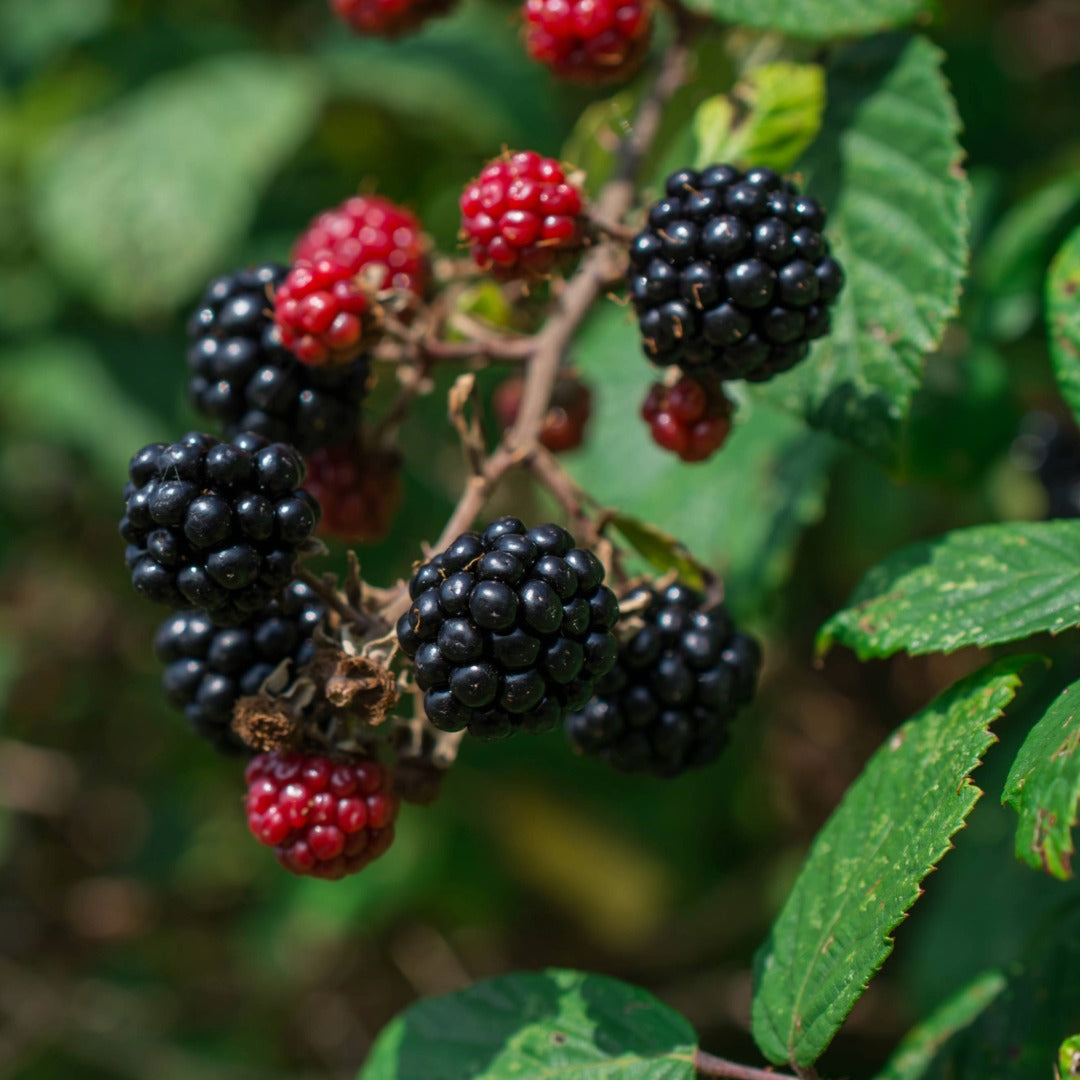

Rubus fruticosus 'Hardy Black'
Hardy Black Blackberry - Rubus fruticosus 'Hardy Black'
Hardy Black Blackberry - Rubus fruticosus 'Hardy Black'
Exposure
- Full sun
Rusticity
Bloom time
- June
- July
- August
- September
- Excellent hardiness, specially selected to withstand Canadian winters.
- Generous, large, black, and glossy fruits with a perfect balance between sugar and acidity.
- Remarkable vigour, forming a robust shrub that produces quickly after planting.
- Nutritional richness: berries brimming with antioxidants and vitamins.
- Easy to grow, adapting to various soil types provided they are well-drained.
Rediscover the joy of wild berries with the 'Hardy Black' blackberry. This variety lives up to its name, combining exceptional resilience against harsh winters with impressive productivity. Grow a vigorous shrub that covers itself in late summer with clusters of plump, sweet, and intensely fragrant blackberries, perfect for family harvests in the garden.
Characteristics
- Foliage: Compound, deep green leaves with serrated edges, providing a dense texture in the garden.
- Flowering / Fruit: White or slightly pink blossoms in spring, attracting pollinators. The fruit consists of large jet-black berries, firm and very juicy, ripening in August and September.
- Habit: Bushy shrub with arching canes. While vigorous, it benefits from being trellised or supported on a fence to make harvesting easier.
- Dimensions: Reaches about 1.2 to 1.8 metres in height with a similar spread.
- Light: Full sun required to encourage sugar concentration in the berries.
- Soil: Thrives in organic-rich, moist, and well-drained soil. Mulching at the base is recommended to retain moisture.
- Temperature: Very hardy (Zone 4), making it one of the most reliable varieties for the Canadian climate.
- Growth: Fast and vigorous, producing fruit on second-year canes (floricanes).
Usage
- Edible Landscaping: Perfect for creating a fruiting hedge to define garden boundaries while offering an abundant harvest.
- Consumption: Delicious fresh, in jams, jellies, or baked into pies and muffins. They also freeze very well.
- Wildlife Benefits: The flowers are an important nectar source for bees and butterflies early in the season.
Maintenance
- Pruning: After harvest, prune the canes that bore fruit down to ground level. Leave the new current-year canes for next year's production.
- Watering: Maintain regular watering, especially during the fruit development period, to prevent the berries from drying out.
- Fertilization: A spring application of compost or natural berry fertilizer will support the plant's vigour.
- Protection: Although hardy, a site protected from dominant winter winds will help preserve the flower buds.
Companion Planting
Maximize your blackberry's health by surrounding it with allied plants. Tansy (Tanacetum vulgare) helps repel certain pests, while Hyssop (Hyssopus officinalis) attracts pollinators and boosts the shrub's vigour. Avoid planting too close to wild raspberries to limit the transmission of common diseases.
Plant details
Dimensions
Dimensions
Characteristics
Characteristics
Habit:
- Creeping
- Compact
Flowering colours:
- White
Plant needs
Plant needs
Watering:
- Moderate to high
Maintenance:
- Easy
- Fertilize regularly
- Remove flowers (year 1)
- Winter protection
Soil requirement:
- Rich
- Sandy
- Well-drained
Features
Features
Resistance:
- Cold
- Heat
Attract:
- Pollinators
- Birds
- Butterflies
Use:
- Vegetable garden
- Border
- Container
- Hanging basket
- In-ground
Attribute:
- Edible
- Continuous harvest
- Fragrant
- Productive