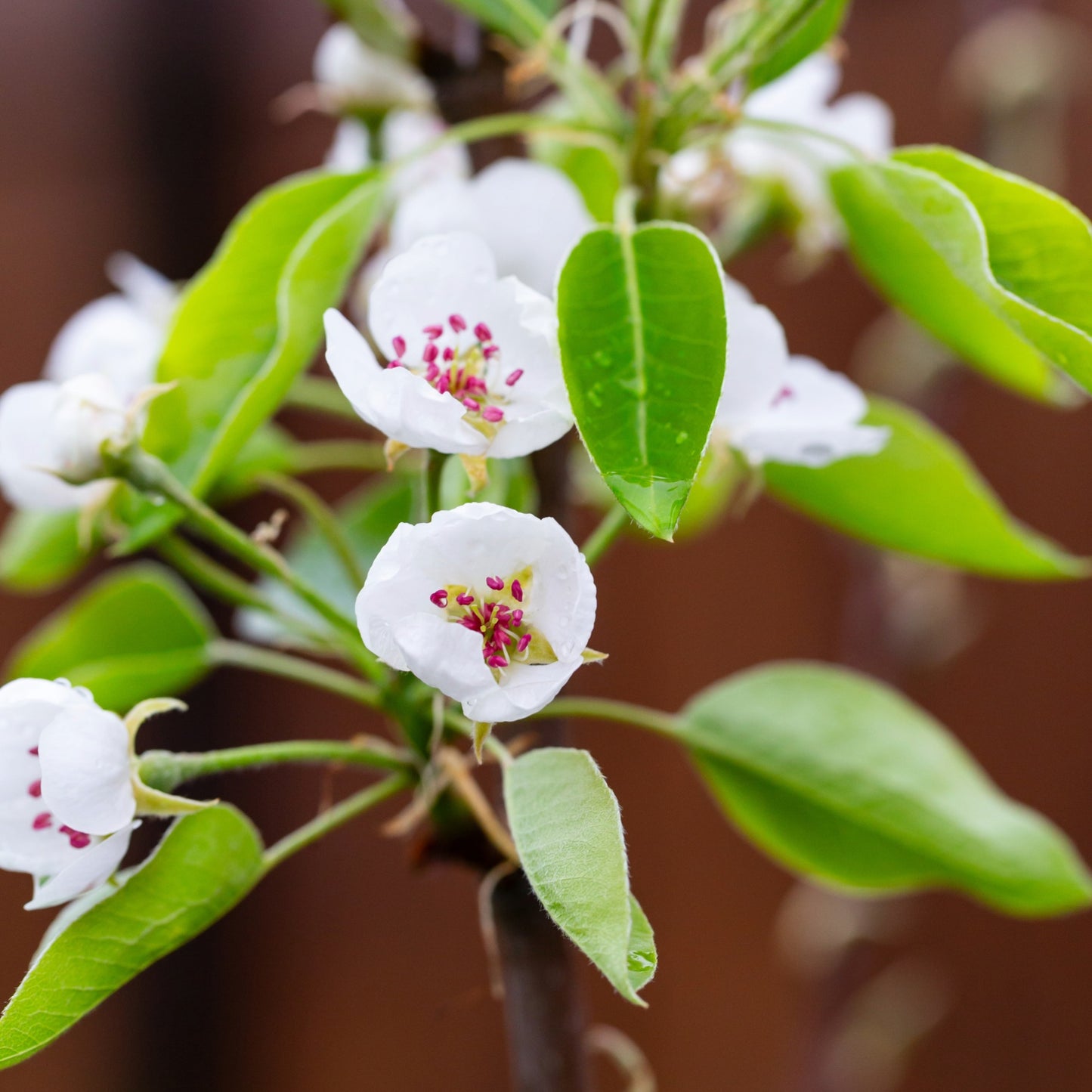


Pyrus communis 'Flemish Beauty'
Flemish Beauty Pear Tree - Pyrus communis 'Flemish Beauty'
Flemish Beauty Pear Tree - Pyrus communis 'Flemish Beauty'
Exposure
- Sun
Rusticity
Bloom time
- May
- Melting, juicy flesh with a rich, musky flavor.
- Excellent hardiness—one of the best choices for cold climates (Zone 4).
- Large, bicolored fruits—creamy yellow with a carmine-red blush.
- Abundant and highly decorative spring bloom.
- A reliable and productive heirloom variety, year after year.
Experience a true heirloom treasure: the 'Flemish Beauty' pear tree. Originating from Belgium and successfully grown in Canada since the 19th century, this variety is one of the hardiest in its class. It is prized for its large fruit with butter-melting flesh and a deliciously rich, musky-sweet flavour. Grow a robust tree that transforms your garden into a gourmet orchard every autumn.
Characteristics
- Foliage: Oval, glossy dark green leaves, sometimes turning an elegant orange-yellow in the fall.
- Flowering / Fruit: Clusters of white blossoms in spring. Produces large, rounded pears with greenish-yellow skin often russeted and blushed with carmine red. The flesh is creamy white, melting, and very juicy. Ripens for harvest by mid-September.
- Rootstock and Dimensions: Typically grafted on hardy rootstock, reaching a height of 4 to 6 metres with a spread of 3 to 4 metres at maturity.
- Pollination: Partially self-fertile, but yield is significantly improved with a compatible pollinator such as 'Bartlett' or 'Anjou'.
- Light: Full sun required (minimum 6 to 8 hours) to maximize sugar content and ensure uniform ripening.
- Habit: Upright and vigorous in youth, spreading with age to form a majestic, rounded canopy.
- Soil: Prefers deep, fertile, and well-drained soil. Tolerates slightly heavier soils better than apple trees but dislikes standing water.
- Temperature: Exceptionally hardy (Zone 4), making it one of the most cold-resistant European pear varieties.
- Resistance: Strong overall vigour, though susceptible to pear scab in very humid regions.
Usage
- Types of Use: Ideal for home orchards, collection gardens, or as a productive shade tree.
- Culinary Benefits: An excellent dessert pear (for fresh eating), also delicious for canning, pies, and poached pears.
- Decorative Benefits: Its spring blooming is among the most spectacular of all fruit trees, covering the tree in a blanket of white.
Maintenance
- Watering: Regular watering is essential, especially during summer dry spells, to prevent fruit from becoming gritty.
- Fertilization: Apply a balanced fertilizer or mature compost in early spring before bud break.
- Pruning: Perform thinning pruning in late winter to remove deadwood and encourage light penetration.
- Harvesting: For optimal texture, pick pears while they are still firm (they finish ripening at room temperature).
- Winter Protection: Apply a protective spiral to the trunks of young trees to guard against rodents and frost cracking.
Companion Planting
Promote biodiversity around your pear tree. Lemon Balm (Melissa officinalis) attracts essential pollinators, while White Clover (Trifolium repens) enriches the soil with nitrogen. Planting Pot Marigold (Calendula officinalis) helps deter certain pests, creating a healthy environment for your harvest.
Plant details
Dimensions
Dimensions
Characteristics
Characteristics
Habit:
- Spreading
- Rounded
Flowering colours:
- White
Plant needs
Plant needs
Watering:
- Moderate
Maintenance:
- Pruning Spring
- Fertilize Regularly
Soil requirement:
- Rich
- Well Drained
Features
Features
Resistance:
- Cold
Attract:
- Pollinators
- Birds
Use:
- Isolated
- Full Ground
Attribute:
- Comestible
- Fragrant
- Early Flowering