

1
/
of
5
Asimina triloba
Asimina triloba – Pawpaw
Asimina triloba – Pawpaw
Exposure
- Sun
- Part shade
Rusticity
4, 5, 6, 7, 8, 9
Bloom time
- May
- June
- Unique tropical taste
- Large exotic foliage
- Resistant to deer
- Superb autumn colour
- Overlooked native fruit
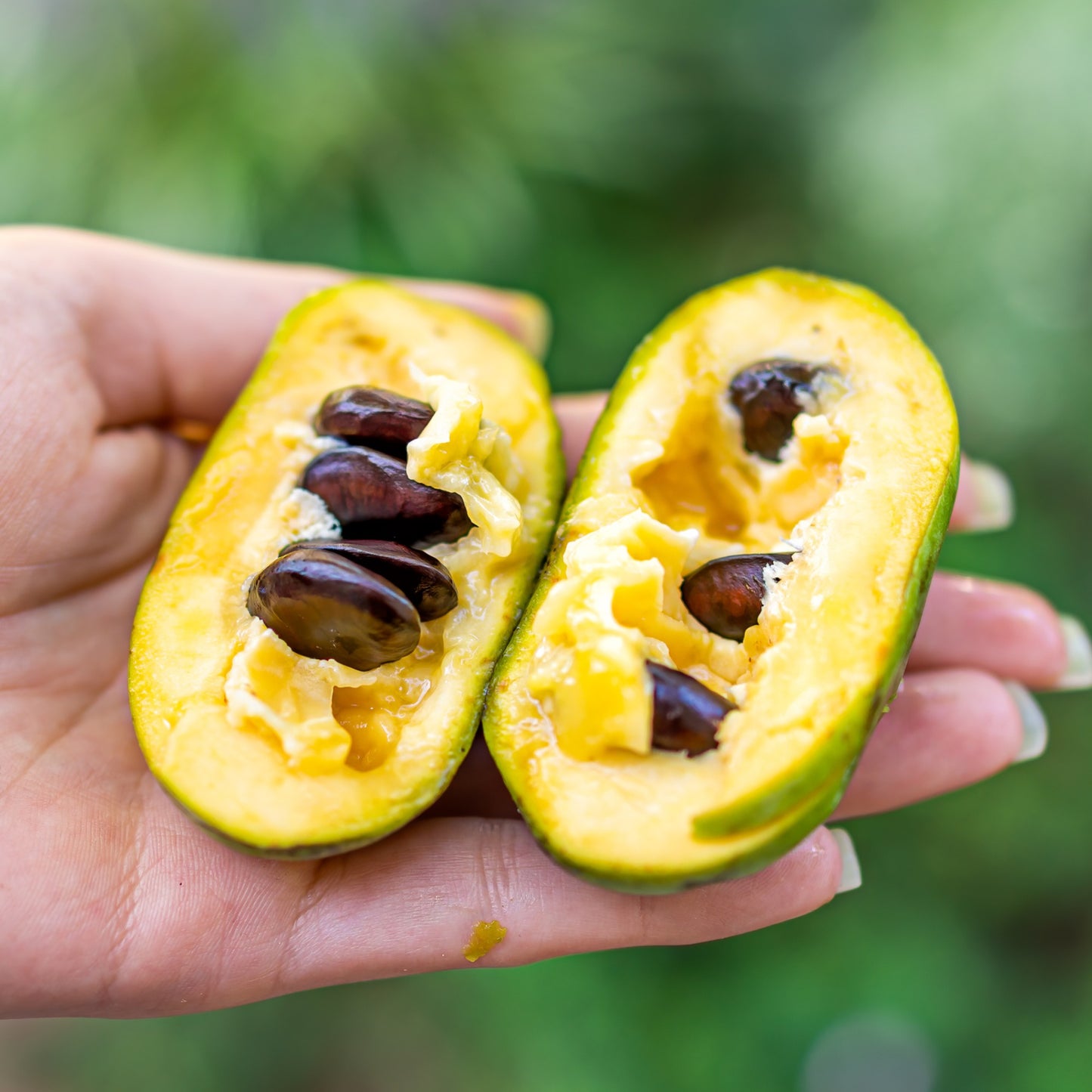
The Asimina triloba, better known as the Pawpaw, brings a surprising touch of exoticism to any landscape. This unique small tree produces the largest edible fruit native to North America, offering a creamy flavour reminiscent of a delicious blend of banana, mango, and pineapple. With its large tropical leaves and elegant silhouette, it instantly transforms a garden corner into a lush oasis while demonstrating exemplary hardiness in cold climates.
Characteristics
- Foliage: Large deciduous leaves (up to 30 cm), a soft green turning a brilliant golden yellow in autumn.
- Flowering / Fruiting / Stems: Solitary deep purple or maroon flowers in spring, followed by clusters of fleshy, green-skinned fruits.
- Light: Prefers full sun for optimal fruit production, but tolerates part shade very well (essential for protecting young plants).
- Habit: Pyramidal in its youth, becoming more rounded and spreading with age.
- Growth: Medium growth rate, typically reaching 4 to 6 metres in height at maturity.
- Soil: Rich in organic matter, deep, moist but always well-drained.
- Temperature: Excellent hardiness (down to zone 4), requires a location protected from prevailing winds.
- Resistances: Naturally resistant to insects and diseases thanks to acetogenins contained in its tissues.
Use
- Types of use: Ideal as a focal point, in mass plantings for a tropical understory effect, or in large containers for young specimens.
- Decorative advantages: Offers a striking textural contrast due to its oversized foliage and luminous fall colour.
Maintenance
- Watering: Keep the soil uniformly moist, especially during the first two years after planting and during summer dry spells.
- Fertilization: Apply a rich compost or balanced organic fertilizer in early spring to support growth and fruiting.
- Pruning: Remove dead or damaged branches in early spring. Limit suckers at the base if you wish to maintain a single-trunk habit.
- Planting: Allow for 3 to 4 metres of spacing. Note: the roots are fragile, handle the root ball with great care during planting.
- Winter Protection: Install protection against rodents and wind for young subjects during the first few years of growth.
Plant details
Dimensions
Dimensions
Spacing
- 400 cm
Spread
300 - 450 cm
Height
400 - 600 cm
Spacing
- 157 in.
Spread
118 - 177 in.
Height
157 - 236 in.
Characteristics
Characteristics
Habit:
- Pyramidal
- Rounded
Flowering colours:
- Brown
- Purple
Plant needs
Plant needs
Watering:
- Tolerates moist soil
- Moderate
Maintenance:
- Medium
- Winter protection
Soil requirement:
- Rich
- Moist
- Well-drained
Features
Features
Resistance:
- White-tailed deer
- Disease
Attract:
- Butterflies
- Pollinators
Use:
- Isolated
- Mass planting
- Flower bed
- In-ground
Attribute:
- Fall colour
- Edible
- Fragrant
- Native
- Small landscaping and yard