
Lonicera caerulea 'Borealis'
'Borealis' Haskap - Lonicera caerulea 'Borealis'
'Borealis' Haskap - Lonicera caerulea 'Borealis'
Exposure
- Sun
- Part Shade
Rusticity
Bloom time
- May
- Exceptionally large plump berries
- Exquisite sweet and tangy flavour
- Natural protection against birds
- Incredible hardiness against cold
- Perfect choice for small spaces
Discover the 'Borealis' Haskap, an exceptional variety developed by the University of Saskatchewan, renowned for producing some of the largest and plumpest berries on the market! This ultra-hardy fruiting shrub will delight you with its high productivity and delicious berries that offer a unique flavour profile, combining the sweetness of a blueberry with the tang of a raspberry. Ideal for small gardens and northern climates, 'Borealis' brings a healthy, delicious, and unique touch to your edible landscape.
The Harvest: Yield and Flavour
The 'Borealis' Haskap stands out for its very early harvest, often considered the first fruity gift of spring. Its large fruits tuck neatly beneath dense foliage, which effectively protects them from the elements.
- Harvest period: Late June - Early July
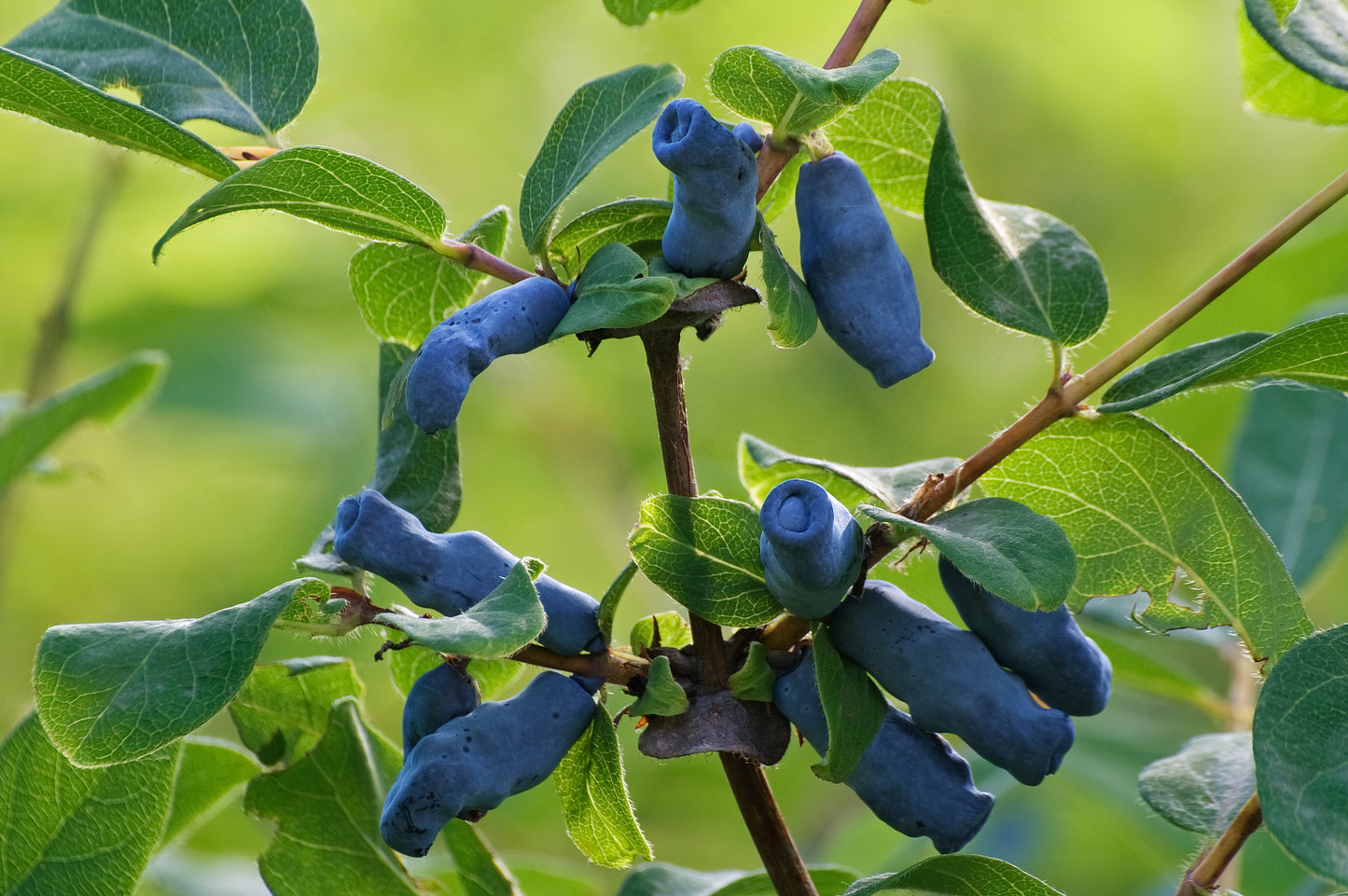
- Visual description: Large, plump, boxy to box-cylindrical berries boasting a powdery-blue to deep violet hue covered in a natural waxy bloom. The skin is remarkably tender, and the juicy flesh retains a pleasant firmness.
- Flavor profile: Sweet, rich, and tangy. It unveils a perfect sugar-to-acid balance, reminiscent of a complex blend of wild blueberry, raspberry, and blackberry.
- Culinary uses: Excellent for fresh eating straight from the bush, it works wonders in smoothies, pies, and homemade jams, or frozen to brighten up your winter breakfasts.
Planting Guide
To successfully establish your 'Borealis' Haskap and stimulate vigorous growth right from the first year, follow these key steps:
- The ideal location: Plant your 'Borealis' in full sun to maximize fruit production and sugar content, though it tolerates very light afternoon shade. Unlike grapevines, this compact shrub requires no structural support, naturally adopting a rounded, upright habit.
- Soil preparation: This haskap prefers a rich, loose, well-drained soil that stays consistently cool and moist. It adapts to a wide pH range (5.5 to 7.5), making it much easier to grow than traditional blueberries. Mix a generous amount of mature compost into your soil before planting.
- Planting out: Dig a hole twice as wide as the root ball. Position the plant so the top of the root ball sits slightly below the surrounding ground level (about 2 to 3 cm) to encourage new stems to shoot up from the base. Fill the hole, tamp gently, and water thoroughly. Space your plants 1.2 to 1.5 metres apart.
- Pollination:
- Type: Self-sterile. The 'Borealis' Haskap requires the presence of a different, compatible haskap variety blooming at the exact same time to ensure cross-pollination and fruit set.
- Suggested partners: 'Tundra', 'Berry Blue', or 'Aurora'.
Care and Maintenance Guide
- Watering: Keep the soil consistently moist but never waterlogged during the first two years of establishment. Regular watering during flowering and fruit development significantly improves berry size and juiciness.
- Fertilization: Top-dress with a layer of mature compost around the base of the shrub every spring. A light application of balanced or natural fruit tree fertilizer at the very start of spring effectively boosts healthy growth.
- Pruning: This shrub requires very little maintenance. For the first 3 to 4 years, no pruning is necessary. Afterward, perform a rejuvenation pruning in late winter by removing the oldest, damaged, or inward-crossing branches to let light penetrate the center.
- Protection:
- Against birds: Birds absolutely love haskap berries; installing bird netting is essential as soon as the fruit starts turning blue to save your harvest.
- Winter care: Gifted with phenomenal cold hardiness (Zone 2), the 'Borealis' Haskap withstands the harshest Canadian winters. Its blossoms can even tolerate spring frosts down to -7°C without damage. No winter protection is required.
Plant details
Dimensions
Dimensions
Characteristics
Characteristics
Habit:
- Rounded
- Bushy
Flowering colours:
- Cream
- Yellow
Plant needs
Plant needs
Watering:
- Moderate
Maintenance:
- Easy
Soil requirement:
- Rich
- Moist
- Well-drained
Features
Features
Resistance:
- Cold
- Disease
Attract:
- Birds
- Pollinators
Use:
- Hedge
- Massed
- Border
- Container
- Open Ground
Attribute:
- Autumn Colour
- Edible
- Fast Growth
- Small Landscaping And Garden
- Produces Berries