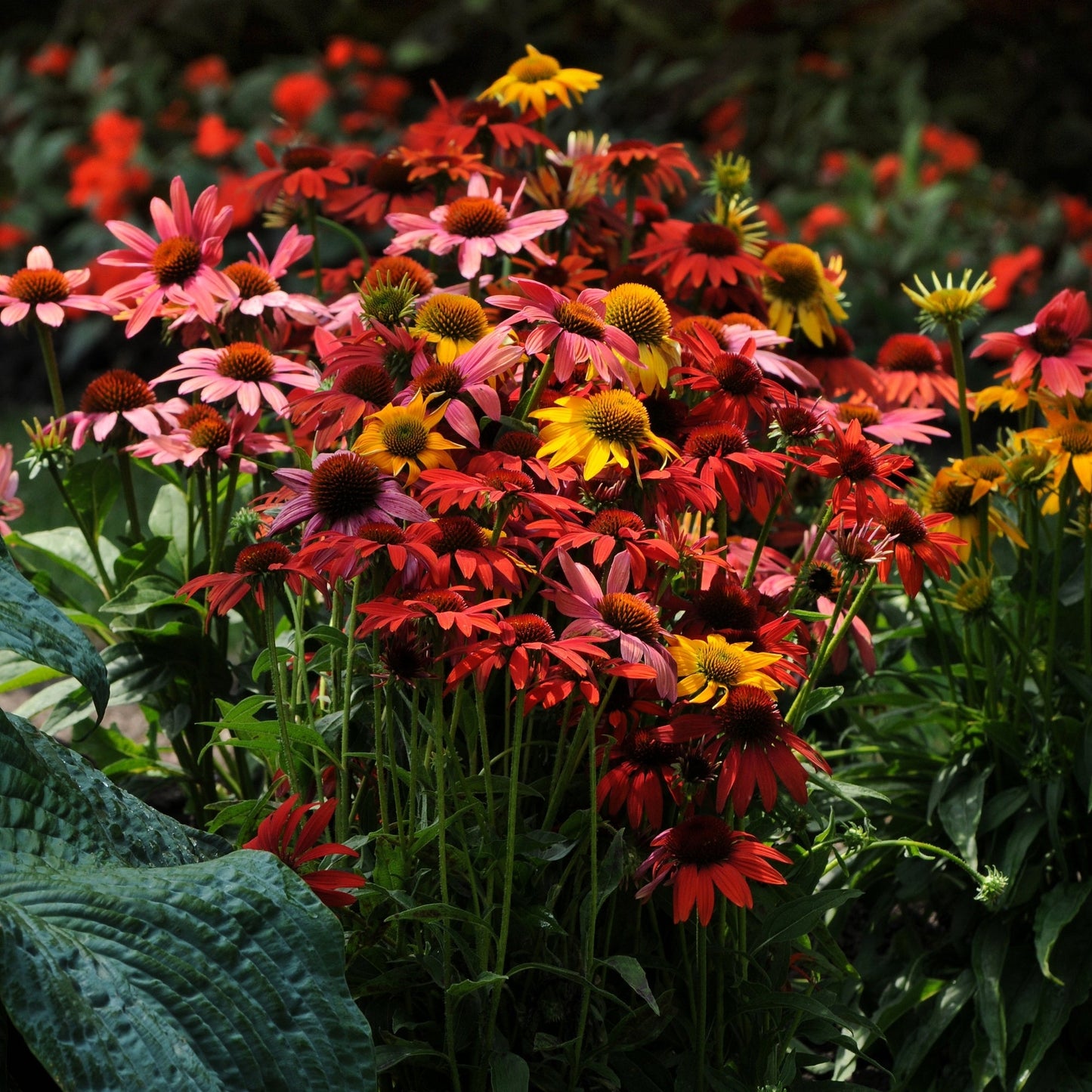
Echinacea 'Cheyenne Spirit' captures the spirit of the North American prairies with its spectacular blend of colours. This award-winning perennial blooms in its very first year, producing an abundance of flowers in shades of purple, pink, scarlet, orange, yellow, cream, or white. Despite the diverse palette within this mix, the fundamental characteristics and maintenance needs remain identical, ensuring reliable performance and constant appeal for both gardeners and pollinators.
Characteristics
Feuillage : The plant forms a mound of green foliage that beautifully highlights the colourful blooms.
Floraison : Large, daisy-like flowers unfurl from late June until frost. Each flower features colourful petals surrounding a prominent, spiky, brown central cone.
Luminosité : It thrives in full sun but easily tolerates a partly shaded location.
Port : This coneflower develops a bushy, compact, and sturdy habit, with well-branched stems that support the numerous flowers.
Croissance : It forms a clump reaching 30 to 75 cm (1 to 2.5 feet) in height and 30 to 60 cm (1 to 2 feet) in width.
Humidité : It withstands summer heat and humidity exceptionally well.
Sol : Its adaptability allows it to grow in varied soil conditions, including poor, dry, and even clay soils. However, it requires well-drained soil, as standing water suffocates its roots and compromises its natural hardiness.
Température : Highly rustic and cold-resistant, it easily braves the rigours of the Canadian winter.
Arrosage : Once established, it tolerates drought very well and only requires watering during extreme heat waves.
Résistances : This robust plant generally fends off diseases and pests thanks to its natural defenses. It also shows excellent resistance to white-tailed deer.
Utilisation
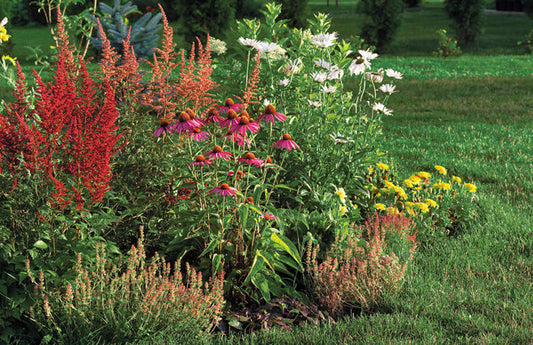
Types d'utilisation : Exceptionally versatile, it fits perfectly into formal flower beds as well as cottage-style or wild gardens. It creates a stunning effect in mass plantings, borders, rock gardens, or for naturalizing a space.
Avantages décoratifs : It delivers a burst of bright, warm colours all summer long. After blooming, the dried cones decorate the garden throughout the winter, catching the frost and providing vital food for birds.
Entretien
Fertilisation : Very low-maintenance, it generally thrives without fertilizer. A simple addition of compost in the spring fully meets its needs.
Taille : Remove faded flowers to encourage an even longer blooming period. To promote a more compact growth, cut the stems back by half in early summer, which will slightly delay blooming. Leave a few dried cones on the plant in autumn to feed goldfinches during the cold season.
Plantation : Divide the clumps every 4 years if they become too dense. In our colder zones, plant in early autumn to ensure strong root establishment before the ground freezes. If your soil is heavy or clay-based, incorporate compost at planting time to improve drainage and protect the crown from rot.
Protection hivernale : Apply a 5 to 10 cm layer of organic mulch (shredded dead leaves or straw) around the base during the first autumn to stabilize the soil against freeze-thaw cycles. Afterwards, simply allow the natural snow cover to insulate the plant, ensuring the location does not retain standing water during the spring thaw.
Osez créer des associations inédites qui sauront refléter votre personnalité, même si pour cela vous deviez déplacer certaines vivaces pour mieux les mettre en valeur.
Variétés à découvrir, la tomate se savoure crue, en sandwich, en bruschetta ou en salade. Cuite, c'est l'ingrédient de base de sauces, soupes et salsas.
En pénétrant au jardin, ce sont souvent les plantes vivaces que l’on remarque en premier. Un massif de sauges, d’hémérocalles, d’astilbes, d’échinacées ou de lavande offre un spectacle d’une beauté...