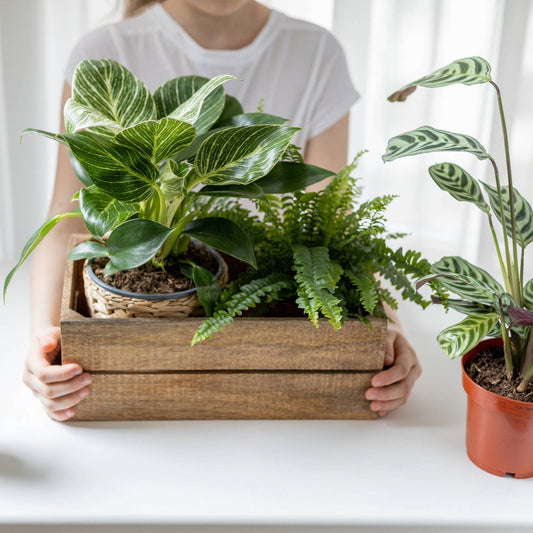
Compact, bushy plant
Assorted Calandiva Plants
Exposure
- Bright brightness without direct sunlight
- Medium brightness
- Low brightness
Rusticity
Bloom time
- November
- December
- January
- February
- March
- Long-lasting and abundant flowering
- Fleshy, succulent leaves
- Varied flower colours
- Easy care
- Toxic
The Calandiva, a cultivated variety of Kalanchoe blossfeldiana, is a popular houseplant known for its extended blooming period and minimal upkeep. Its blossoms, which appear in dense clusters, can last for several weeks, even months, providing a consistent source of colour for your home. As a succulent, it's particularly well-suited for those who might occasionally forget to water their plants. It thrives in typical indoor environments, partly due to its ability to tolerate the dry air often found in our homes. Additionally, its vibrant and colourful blooms are especially appreciated during seasons when natural light is scarce.
Key Features
- Foliage: Thick, fleshy, glossy dark green leaves that form a dense rosette. These leaves act as water reservoirs, enabling the plant to withstand periods of dryness.
- Form: Compact and rounded growth, making it ideal for small spaces, window ledges, and plant arrangements.
- Growth: Moderate growth, typically reaching a height and width of 20 to 30 cm.
- Care: Extremely easy, making it an excellent choice for novice gardeners or those with limited time for plant care.
- Bloom: Abundant and very long-lasting blooms, with double flowers that resemble small roses, available in a wide range of vivid colours.
Care Instructions
- Light: Prefers bright, indirect light for optimal blooming. Avoid direct, intense sunlight, especially during the hottest parts of the day, as it can scorch the leaves.
- Watering: Allow the soil to dry almost completely between waterings. Overwatering can lead to root rot. Reduce watering frequency during the winter.
- Soil: Use a well-draining soil mix, ideally a blend specifically for cacti and succulents. Good drainage is essential to prevent root rot.
- Humidity: Adapts well to typical indoor humidity levels. Excessive humidity is generally not required.
- Temperature: Prefers temperatures between 15°C and 24°C. Avoid cold drafts and sudden temperature changes.
- Fertilizing: Fertilize lightly during the blooming period with a balanced liquid fertilizer for flowering plants, following the manufacturer's instructions. Discontinue fertilizing during the winter dormancy period.
Plant details
Dimensions
Dimensions
Characteristics
Characteristics
Habit:
- Upright
Flowering colours:
- Red
- Pink
- Purple
- Orange
- Yellow
- White
Plant needs
Plant needs
Watering:
- Let dry completely
Maintenance:
- Easy
Soil requirement:
- Well drained
- potting soil for succulents and cacti
Features
Features
Resistance:
Attract:
Use:
- Flower Pot
- Container
- Patio Pot
Attribute:
- Long flowering

Related articles
-
Bring Your Plants Indoors for Winter: The Compl...
Read the articleDon't get caught by the first frost! Prepare your outdoor plants for winter with our complete guide.
-
When and how to repot house plants
Read the articleAlthough a plant can spend several months and sometimes even several years in the same pot, over time its roots invade all the available space.
-
Choosing the best potting soil for your indoor ...
Read the articleDon't let your plants stall: learn how to choose the ideal potting mix and optimize drainage for vibrant foliage.