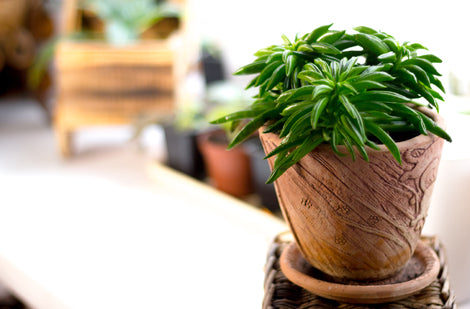
Euphorbia pulcherrima
Euphorbia pulcherrima - Poinsettia (Holiday Star)
Exposure
- Bright indirect light
Bloom time
- November
- December
- January
- February
- Classic seasonal focal point for holiday décor
- Vibrant star-shaped long-lasting colored bracts
- Naturally compact habit for tabletop styling
- Available in traditional and pastel shades
- Compact bushy form for bright tables
The definitive botanical emblem of the holiday season, Euphorbia pulcherrima transforms winter interiors with warmth and timeless elegance. Native to tropical regions of Mexico and Central America, this beloved indoor plant features showy, star-shaped colorful bracts framing delicate central flowers. From deep scarlet classic selections to modern compact Princettia® hybrids boasting vibrant pinks and pure whites, the poinsettia instantly delivers festive charm to any home.
Characteristics
- Bloom: Features expansive leaf-like bracts arranged in radiant star formations around central golden flower buttons (cyathia).
- Colour Display: Retains its vibrant pigmentation from late November through early spring, offering lasting indoor performance.
- Foliage: Produces broad, rich forest-green leaves along sturdy upright branching stems.
- Habit: Naturally bushy, compact, and well-balanced, forming an attractive dome of color.
- Light: Demands abundant bright indirect light; shield from harsh scorching midday direct sun and dark corners.
Varieties & Princettia® Series in Garden Centers
Garden centers provide both traditional cultivars and innovative compact selections:
- Classic Poinsettia (Euphorbia pulcherrima): Features large velvety bracts available in scarlet red, winter cream, deep burgundy, salmon, and marbled patterns.
- Princettia® Series (Inter-specific Hybrid): Bred by crossing with Euphorbia cornastra, this series forms dense, compact mounds covered with abundant, neat star bracts. It stands out with vivid pastel pinks, hot magenta, and exceptionally pure, clean whites.
Use
- Style & Placement: Feature it as a holiday table centerpiece in the dining room, on a side table in the living room, or atop an entryway console protected from cold drafts.
- Decorative Benefits: Complements evergreen boughs, decorative birch branches, and warm seasonal lighting for a classic winter display.
Care & Success
- Watering: Water with lukewarm water once the top layer of potting mix feels dry to the touch. Remove decorative foil or drainage-blocking outer pots to prevent standing water and root rot.
- Temperature: Maintain steady household temperatures between 18°C and 21°C (65°F to 70°F). Keep clear of electric baseboards, radiators, and cold window drafts.
- Winter Transport Warning: Wrap plants securely in insulated paper or shopping bags when taking them home during freezing weather; even brief exposure to freezing temperatures causes foliage collapse.
- Potting Soil: Requires an airy, well-draining indoor potting blend enhanced with peat moss and perlite.
- Fertilizing: Do not fertilize while colored bracts are on display. Resume feeding with balanced plant food in spring when fresh green shoots emerge.
- Toxicity: Mildly toxic; milky sap can cause mild stomach upset or minor skin irritation in pets if ingested.
How to Rebloom Your Poinsettia
Because poinsettias are short-day plants, reblooming them at home requires a structured lighting routine:
- Spring Pruning (Mid-April): Cut stems back to approximately 10 to 15 cm above the soil, leaving 2 to 3 nodes per branch. Resume watering and feeding as fresh green growth appears.
- Summer Growth (June to August): Move outdoors to partial shade once overnight temperatures stay above 13°C. Pinch branch tips in late July to promote full, bushy branching.
- Darkness Regimen (Starting September 20): For 8 to 10 weeks, provide 14 hours of continuous, complete darkness nightly (from 5 PM to 8 AM in a dark closet or under an opaque container), combined with 10 hours of bright daytime light.
- Holiday Display (Late November): As soon as upper bracts develop saturated colour, return the container to its permanent bright indoor display position and enjoy the season!
Plant details
Dimensions
Dimensions
Characteristics
Characteristics
Habit:
- Upright
- Bushy
- Compact
Flowering colours:
- Red
- Hot pink
- Pure white
- Soft pink
- Cream
- Bicolor
Plant needs
Plant needs
Watering:
- Moderate
- Allow top inch to dry
Maintenance:
- Moderate
Soil requirement:
- Indoor potting soil
Features
Features
Resistance:
Attract:
Use:
- Centerpiece
- Decorative pot
- Accent plant
- Flowering houseplant
Attribute:
- Holiday décor
- Colorful bracts
- Long lasting
- Iconic seasonal plant

Related articles
-
-
Kalanchoe: The Secret to Massive Blooms That La...
Read the articleNeed lasting colour? The Kalanchoe blooms profusely for over two months! An easy succulent that tolerates neglect and adds a vibrant touch to your home.
-
Snake Plant: The Unkillable Houseplant, Perfect...
Read the articleLooking for a robust plant that thrives on neglect? Meet the Sansevieria, the champion of clean air! Learn how to care for this striking succulent, explore fascinating varieties like 'Moonshine'...
-
Edible Flowers: Top 5 for Garden and Kitchen
Read the articleOffrant une belle gamme de couleurs, de formes et de textures, les fleurs comestibles enthousiasment les amoureux de jardinage et de cuisine.
-
Tropical Flowering Plants: A touch of the exoti...
Read the articleDreaming of a getaway? Add these spectacular tropical plants to your outdoor decor and enjoy a summer with Southern vibes, right at home!
-
Keep a palm tree on the terrace - why not!
Read the articleIt’s hard to resist the call of the tropics when the sun and mild temperatures finally make an appearance. There is nothing better than a palm tree on the terrace...