Nephrolepis exaltata
Nephrolepis exaltata – Boston Fern
Exposure
- Bright Light Without Direct Sun
- Medium Light
Rusticity
- Elegant cascading fronds
- Naturally purifies indoor air
- Non-toxic to pets
- Ideal for humid bathrooms
- Adds texture and movement
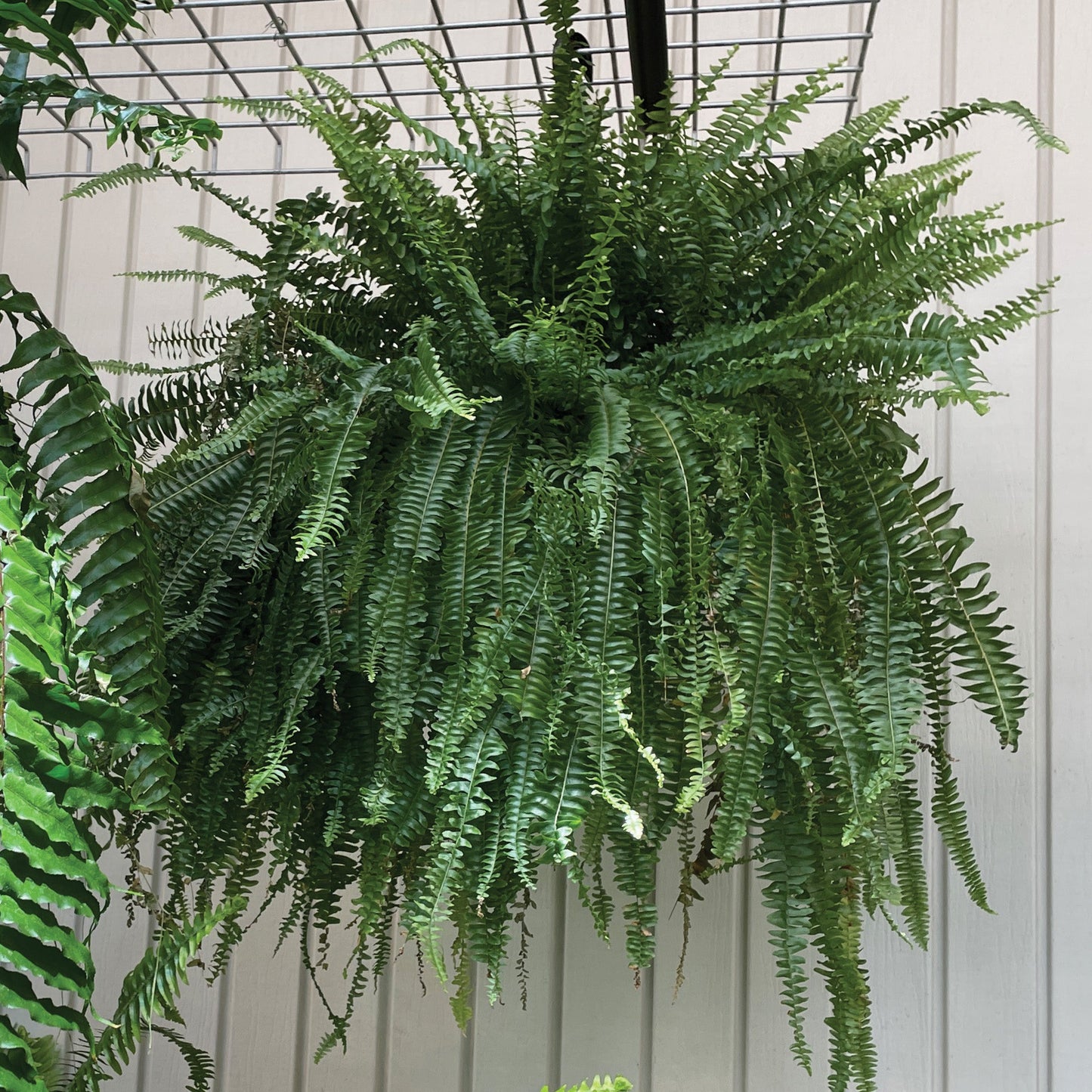
Create an instant indoor jungle atmosphere with the elegant Boston Fern. A show-stopping plant of the Victorian era, it continues to captivate with its abundance of light, cascading fronds that bring structure and a refreshing burst of green to any space. This tropical champion purifies the air and revitalizes dull corners. Adopt it to transform a dry environment into a genuine haven of peace.
Characteristics
- Foliage : Pinnate (feather-like) fronds of a medium green, dense and evergreen. They grow in erect clumps before arching downwards gracefully, creating a beautiful cascading habit.
- Stems : Non-flowering. Reproduction occurs via spores (small brown dots, called sori, on the underside of the leaves) and runners (stolons).
- Light : Prefers bright, indirect light. Direct afternoon sun will scorch the foliage. It tolerates medium light conditions.
- Habit : Cascading and bushy, perfect for hanging baskets.
- Growth : Fast. Reaches its mature size within a few years under ideal conditions.
- Potting Mix : A light indoor potting mix rich in organic matter that ensures good drainage while retaining moisture (a blend based on peat moss and perlite is ideal).
- Temperature and Humidity : Ideal between 18 °C and 24 °C (65 °F and 75 °F). Requires high ambient humidity (at least 50 %), as dry air is its main enemy.
- Resistances : Renowned for its ability to filter out certain air pollutants. Non-toxic to cats and dogs.
Utilization
- Types of utilization : Hanging basket, container, office, bathroom or kitchen (for humidity), feature plant.
- Decorative Advantages : Adds an element of texture and movement thanks to its long, arching fronds. Creates a tropical, luxuriant ambiance, softening the hard lines of any decor.
Care
- Watering : Keep the soil consistently moist, never allowing it to dry out completely or become waterlogged. Water deeply as soon as the top inch of soil feels dry. Reduce watering in winter.
- Fertilization : Apply a balanced liquid fertilizer for green plants once a month, from spring to fall. Cease fertilization in winter.
- Pruning : Remove yellowed or dried-out fronds at the base to stimulate new growth and maintain an attractive habit.
- Planting : Repot in spring when the roots are pot-bound, into a slightly larger container (2 to 5 cm larger) using fresh, well-draining soil.
Plant details
Dimensions
Dimensions
Characteristics
Characteristics
Habit:
- Trailing
- Bushy
Flowering colours:
Plant needs
Plant needs
Watering:
- Moderate
- Mist Foliage Regularly
Maintenance:
- Easy
- Fertilize Regularly
- Cut Back
- Mist Foliage Regularly
Soil requirement:
- Soil rich in humus
- Well drained
- Fresh
Features
Features
Resistance:
- Lack of Light
- Dry Air
- Pest
Attract:
Use:
- Thriller Pot
- Trailing Pot
- Hanging
- Decoration
Attribute:
- Non-Toxic Cat
- Non-Toxic Dog
- Shade

Related articles
-
Bring Your Plants Indoors for Winter: The Compl...
Read the articleDon't get caught by the first frost! Prepare your outdoor plants for winter with our complete guide.
-
When and how to repot house plants
Read the articleAlthough a plant can spend several months and sometimes even several years in the same pot, over time its roots invade all the available space.
-
Choosing the best potting soil for your indoor ...
Read the articleDon't let your plants stall: learn how to choose the ideal potting mix and optimize drainage for vibrant foliage.