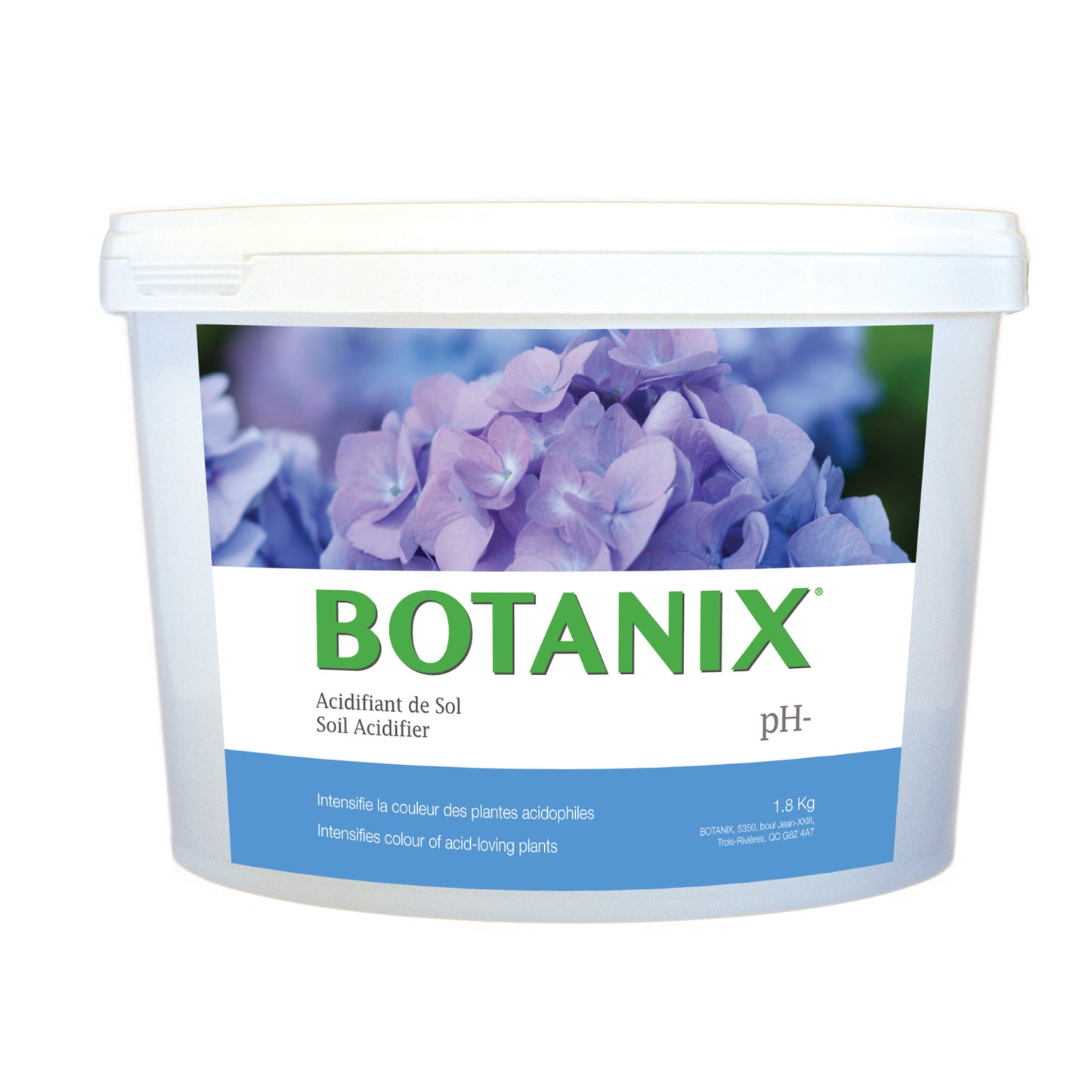
Botanix Soil Acidifier
Botanix SKU:ENGASBO
- Optimizes nutrient absorption
- Lowers soil pH to ideal levels
- Intensifies the blue colour of hydrangeas
- Ideal for acid-loving plants (blueberries, azaleas, etc.)
- Formula simple and effective (elemental sulphur)
Give your acid-loving plants the environment they deserve! The Botanix Soil Acidifier is a powerful, targeted solution to correct overly alkaline (high pH) soils. This product is absolutely essential for plants that thrive in an acidic environment, particularly the blueberries, azaleas, rhododendrons, and blue hydrangeas.
By lowering the soil pH, this acidifier allows your plants better absorption of essential nutrients, such as iron, which are often locked up in neutral or alkaline soils. The result? More vigorous plants, healthy growth, and, for hydrangeas, a vibrant, intense blue colour!
Why Choose Botanix Soil Acidifier?
- Achieves ideal pH: The product corresponds the pH level to maintain it below the 6 threshold, offering the perfect environment for ericaceous plants.
- Optimizes nutrients: The product improves the soil environment, facilitating the uptake of crucial nutrients for acid-loving plants.
- Intensifies colour: For hydrangeas specifically, more acidic soil intensifies the blue pigmentation, providing you with spectacular blooms.
- Ideal for small fruits: Ensure better yield and healthy growth for your blueberries, strawberries, and raspberries crops.
Understanding pH and Your Soil
For acid-loving plants (like blueberries and rhododendrons) to thrive, the soil pH should ideally be below 6.0 (slightly acidic).
- Sandy Soils: These soils are often naturally more acidic. If they are too alkaline, they generally require less acidifier to correct the pH.
- Clay Soils: These soils have a strong "buffering capacity" and are more resistant to change. They will often require a higher dose of acidifier (elemental sulphur) or repeated applications to reach the desired pH level.
Conversely, if you were growing alkaline-loving plants or trying to correct overly acidic soil, you would need to add lime.
Use and Directions
It is recommended to test the soil pH before using this acidifier to determine the exact need.
- Measure: Measure the appropriate quantity according to the size of your plant or the area to be treated. Use 125 ml (or 125 g, 1/2 cup) per square metre (11 sq ft) for a large area, or 15 ml (1 tbsp) per individual plant.
- Application: Spread the granules evenly around the base of the plant, being sure to avoid direct contact with the trunk or main stems. Extend the product to the outer limit of the branches (the drip line).
- Incorporate: Spread the acidifier around the plant and incorporate it lightly into the soil using a hoe or rake without disturbing superficial roots.
- Activate: Water thoroughly after application to activate the granules and start the process. Water helps dissolve the granules and carry the acidifying agent down to the root zone.
- Repeat: To maximize results and maintain the pH level, repeat the application every 4 weeks if necessary.
Detailed Additional Information
- Targeted plants: Blueberries, azaleas, rhododendrons, blue hydrangeas, strawberries, raspberries, etc.
- Function: Lowers soil pH (ideally below 6) to improve nutrient absorption.
- Coverage: 125 ml (or 125 g, 1/2 cup) per sq m (11 sq ft) or 15 ml (1 tbsp) per plant.
Dimensions
Dimensions
Coverage area
Coverage area
125ml (1/2 cup) per m² (11ft²)
15ml (1 tbsp) per plant
To maximize results, repeat the application every 4 weeks.
125g = 125ml = 1/2 cup
Ingredients
Ingredients

Articles
-
Fertilize your lawn - a program for a green and...
Learn moreLawn grasses are nourished by the sun and draw from the soil, water and minerals they need. Fertilization fills gaps in the soil and provides the nutrients it needs to...
-
Sowing and Overseeding Your Lawn
Learn moreDreaming of a lush, weed-free lawn? Learn how to sow and overseed your lawn like a pro! Our complete guide reveals all the secrets to a dense, perfectly healthy lawn.
-
How to care for your annual flower plants
Learn moreTransform your garden into a veritable festival of colors with our expert tips for caring for your annual flowers. Here are our tips for caring for your annuals and enjoying...
-
Soil Analysis - Start your projects from the gr...
Learn moreL’analyse de sol est votre point de départ pour bien réussir vos projets de jardinage et d’aménagement paysager. La fertilité du sol, la teneur en matière organique (richesse), le type...