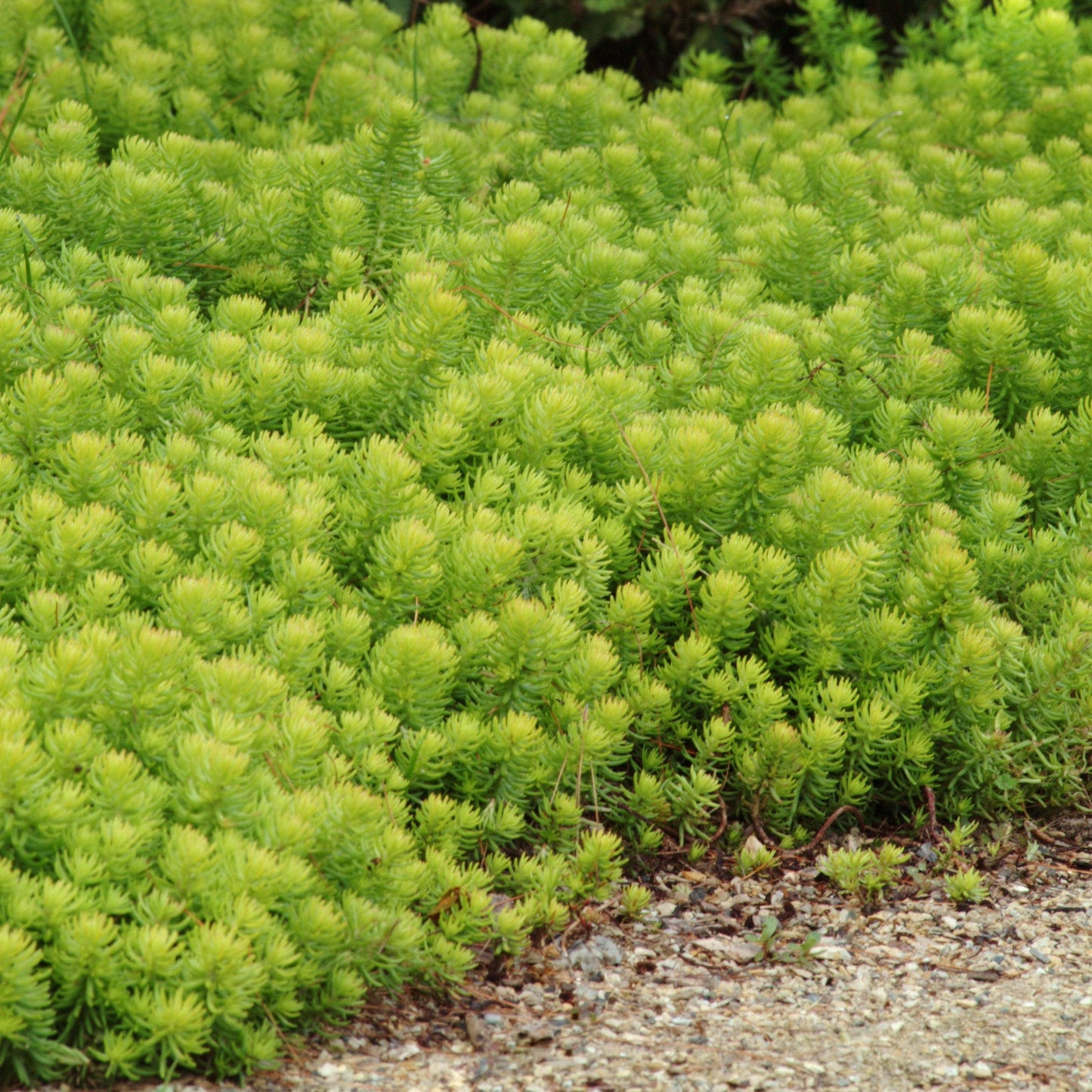
'Angelina' Stonecrop (Sedum reflexum 'Angelina', syn. Sedum rupestre) is a spectacular perennial groundcover that illuminates the garden with its colourful foliage and fast growth. It stands out with its brilliant hues that evolve with the seasons, shifting from chartreuse to gold, then to orange. Ideal for difficult spots, it offers a robust and magnificent solution for rock gardens and borders.
Characteristics
Foliage: It develops evergreen foliage resembling fine, succulent needles. Its colour is its main asset: an electric chartreuse that turns golden yellow in full sun. With the arrival of cooler weather in the fall, it takes on flamboyant shades of orange and gold.
Flowering: In mid-summer, it produces clusters of small, star-shaped yellow flowers that rise just above the foliage and attract pollinators.
Light: It demands full sun to develop its most vivid colours. It tolerates partial shade, but its foliage will be more green.
Habit: It forms a dense, low, creeping mat that spreads quickly to cover the ground.
Growth: Fast. It reaches a height of 10 to 15 cm (4-6 inches) with a spread of 30 to 45 cm (12-18 inches).
Moisture: It prefers soil that dries out completely between waterings.
Soil: It excels in average to poor and very well-drained soils. It does not tolerate heavy, wet soils.
Hardiness: Extremely hardy, it faces Zone 3 winters without any problem.
Watering: Once established, it demonstrates excellent drought tolerance and requires almost no watering.
Resistance: This is a very robust plant that resists deer, rabbits, drought, heat, and slugs.
Uses
Types of Use: It is a perfect choice as a groundcover for large areas, dry slopes, or rock gardens. It is also magnificent in containers, where it will spill over in a colourful cascade.
Ornamental Features: Its brilliant foliage offers intense colour and unique texture year-round. Its transformation into orange hues in the fall extends its interest well beyond the summer season.
Care
Fertilizing: It requires no fertilization; it prefers poor soils.
Pruning: Its maintenance is minimal. No pruning is required.
Planting: Plant it in a very sunny location with excellent drainage. Space plants 30 to 60 cm apart to form a groundcover quickly.
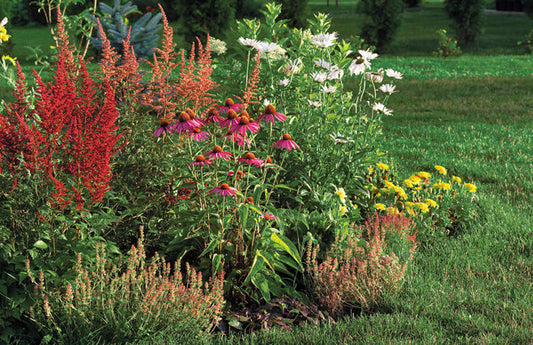
Osez créer des associations inédites qui sauront refléter votre personnalité, même si pour cela vous deviez déplacer certaines vivaces pour mieux les mettre en valeur.
Variétés à découvrir, la tomate se savoure crue, en sandwich, en bruschetta ou en salade. Cuite, c'est l'ingrédient de base de sauces, soupes et salsas.
En pénétrant au jardin, ce sont souvent les plantes vivaces que l’on remarque en premier. Un massif de sauges, d’hémérocalles, d’astilbes, d’échinacées ou de lavande offre un spectacle d’une beauté...