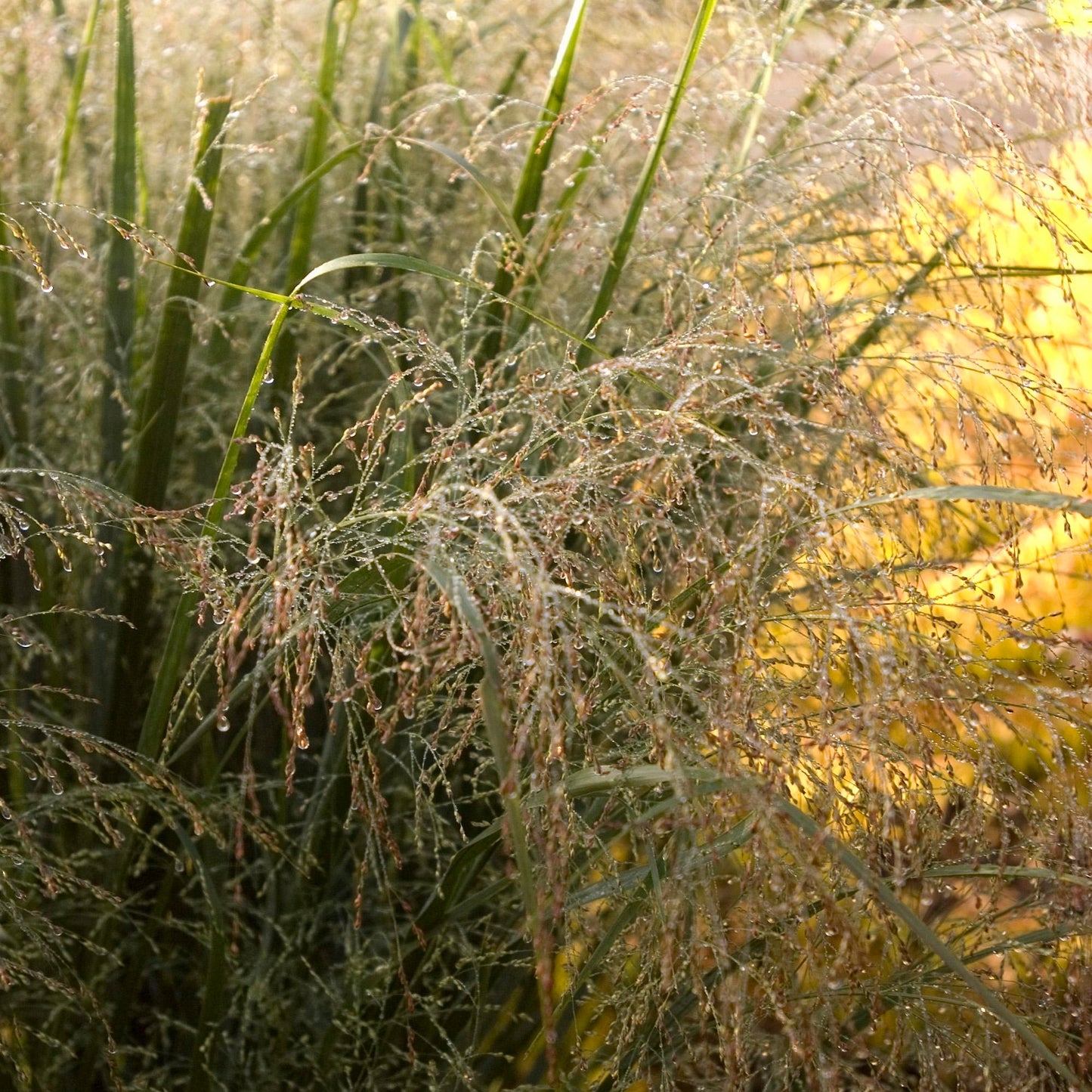
'Northwind' Switchgrass is an exceptional ornamental grass, named "2014 Perennial Plant of the Year" for its flawless performance and beauty. Its main benefit is its impeccable structure: it forms a very straight, columnar clump that never flops, even under the weight of rain or snow. It is the perfect plant to add verticality, structure, and graceful movement to the garden, across all four seasons.
Characteristics
Foliage: It develops very dense deciduous foliage. The wide, magnificent steel-blue-green blades create a textured column of colour during the summer. In the fall, the foliage takes on a rich golden-yellow colour.
Flowering: In late summer, very fine and airy, pink-hued flower panicles emerge just above the foliage, creating a delicate cloud.
Winter Interest: The dried foliage and flower spikes persist through the winter, offering a striking architectural structure in the snowy garden and a food source for birds.
Light: It thrives in full sun, which ensures its best colouration and its straightest habit.
Habit: It forms a very upright, narrow, and columnar clump.
Growth: With a medium growth rate, it reaches a height of 1.2 to 1.8 m (4-6 feet) with a spread of 60 to 90 cm (2-3 feet).
Soil: It is an extremely adaptable plant that tolerates a wide range of soils, from clay to sand, but prefers good drainage.
Hardiness: Very hardy, it faces Zone 4 winters without any problem.
Resistance: This robust grass resists White-tailed deer very well and admirably tolerates drought once established.
Uses
Types of Use: Its vertical structure makes it an excellent choice as an architectural accent, for creating a narrow privacy screen, or at the back of a border. It is spectacular in mass plantings for a modern prairie effect.
Ornamental Features: It offers year-round visual interest: blue-green foliage in summer, golden colour in fall, and a graphic, persistent silhouette in winter.
Care
Watering: Water regularly during the first season to establish it. Afterwards, it is very drought tolerant.
Fertilizing: No fertilization is necessary. It is content in poor soils.
Pruning: Maintenance is minimal. Cut the dry foliage to the ground in late winter or very early spring, before new shoots emerge.
Planting: Plant it in the spring or fall in a sunny location. Divide the clump in spring only if the center becomes bare after several years.
Winter Protection: No protection is required for this very hardy grass.
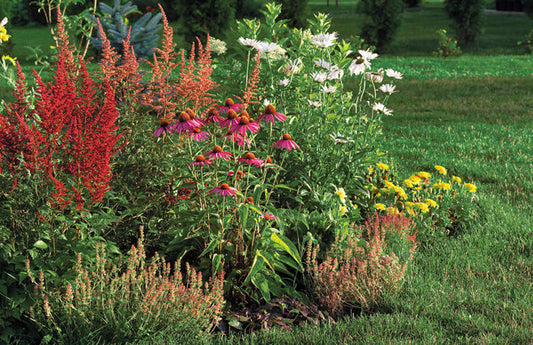
Osez créer des associations inédites qui sauront refléter votre personnalité, même si pour cela vous deviez déplacer certaines vivaces pour mieux les mettre en valeur.
Variétés à découvrir, la tomate se savoure crue, en sandwich, en bruschetta ou en salade. Cuite, c'est l'ingrédient de base de sauces, soupes et salsas.
En pénétrant au jardin, ce sont souvent les plantes vivaces que l’on remarque en premier. Un massif de sauges, d’hémérocalles, d’astilbes, d’échinacées ou de lavande offre un spectacle d’une beauté...