Skip to product information
1 of 2

Agastache foeniculum

Agastache foeniculum – Anise Hyssop

Agastache foeniculum – Anise Hyssop

Format

Exposure

  • Sun
  • Partial shade

Rusticity

3, 4, 5, 6, 7, 8, 9

Bloom time

  • July
  • August
  • September
  • October

  • Intense licorice fragrance
  • Monarch and bee magnet
  • Exceptionally long blooming
  • Highly drought resistant
  • Edible foliage and flowers

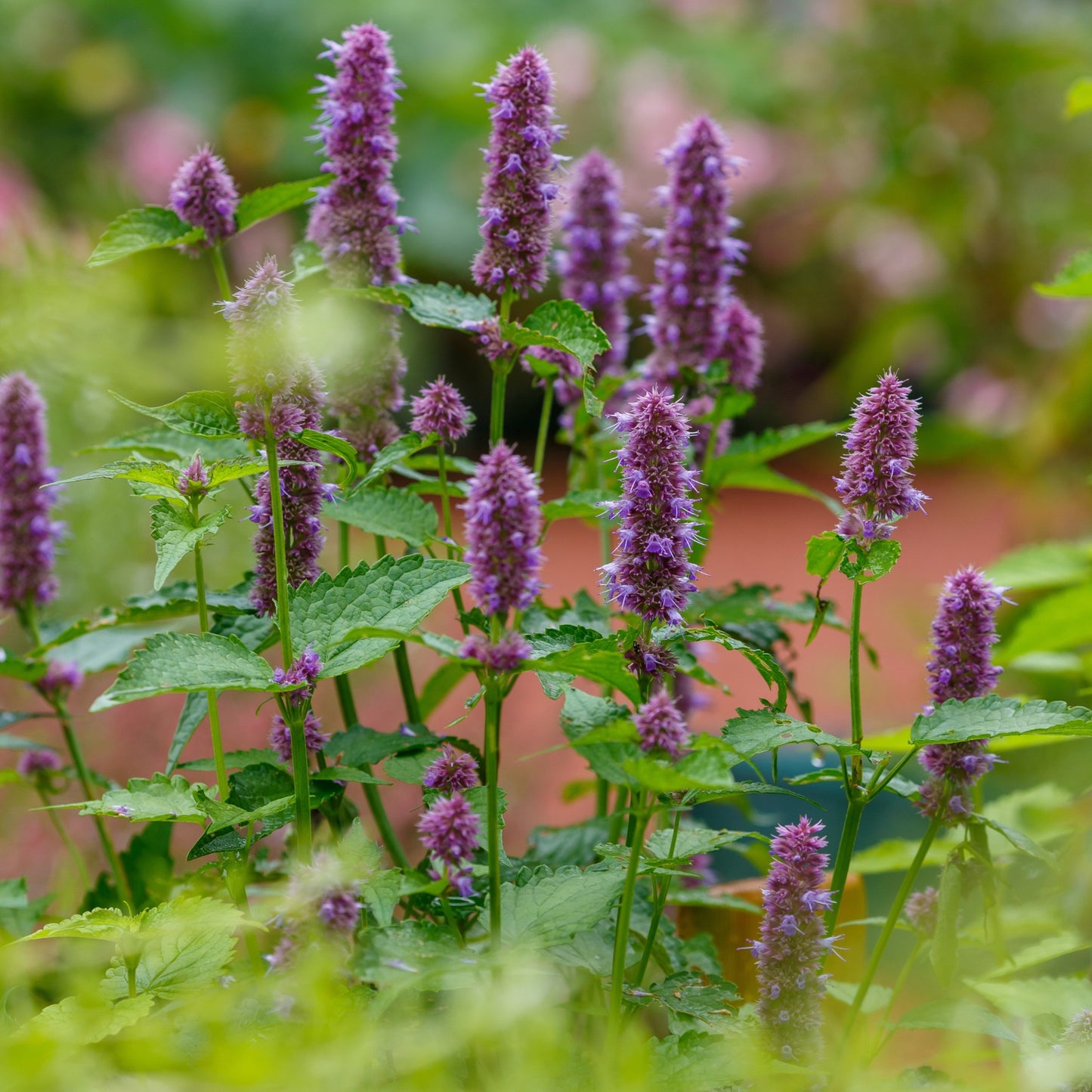
Anise Hyssop is a true ally for the gardener seeking to combine aesthetics with biodiversity. This Canadian native perennial stands out with its tall, bluish-purple flower spikes that act as an irresistible magnet for butterflies and bees all summer long. Its foliage, releasing an enchanting scent of anise and licorice, brings a unique sensory dimension to your landscaping while offering excellent drought resistance.

Characteristics

  • Foliage: Features lance-shaped, toothed green leaves that release a distinct anise fragrance when brushed. Deciduous, it forms a dense and aromatic base.
  • Flowering: Produces a multitude of long, dense spikes of tiny tubular purple-to-mauve flowers, blooming generously from July until the first frosts.
  • Light: Prefers full sun for maximum flowering but tolerates light afternoon shade.
  • Habit: Presents an erect and columnar habit, perfectly structuring the middle or back of flower beds.
  • Growth: Displays rapid growth, quickly forming a vigorous clump reaching up to 90 cm in height.
  • Soil: Thrives in well-drained soil, even poor or sandy types. It particularly dislikes waterlogged soils during winter.
  • Temperature: Perfectly adapted to the Canadian climate, it is hardy up to zone 3.
  • Resistances: Remarkable drought resistance once established and rarely prone to disease.

Use

  • Types of use: Ideal for pollinator gardens, flower prairies, naturalistic massifs, or in containers on a sunny terrace.
  • Decorative advantages: Provides lasting vertical bloom and constant visual interest thanks to its spikes that remain structured even after flowering.

Maintenance

  • Watering: Water regularly during the first year of planting. Once established, it tolerates dry spells very well.
  • Fertilization: Apply a small amount of compost in the spring. Avoid overly rich fertilizers.
  • Pruning: Cut stems back to the ground late in the fall or, ideally, in the spring to provide winter shelter for beneficial insects.
  • Planting: Provide a spacing of 45 to 60 cm to allow for good air circulation.
  • Winter Protection: Requires no specific protection, provided the soil drainage is efficient.

Plant details

Dimensions

Spacing
- 24 in.
Spread
18 - 24 in.
Height
24 - 36 in.

Characteristics

Habit:

  • Upright

Flowering colours:

  • Mauve
  • Purple
  • Blue

Plant needs

Watering:

  • Tolerates dry and well-drained soil
  • Moderate

Maintenance:

  • Easy
  • Cut back in spring

Soil requirement:

  • Well-drained
  • Poor
  • Adaptable

Features

Resistance:

  • White-tailed deer
  • Drought
  • Cold
  • Heat

Attract:

  • Pollinators
  • Butterflies
  • Birds
  • Hummingbirds

Use:

  • Border
  • Massif
  • Flower bed

Attribute:

  • Native
  • Fragrant
  • Long bloom
  • Edible

View full details
1 of 3