
1
/
of
1
Alnus glutinosa 'Imperialis'
Alnus glutinosa 'Imperialis' – Cut-leaf Common Alder
Alnus glutinosa 'Imperialis' – Cut-leaf Common Alder
Exposure
- Sun
- Partial shade
Rusticity
3, 4, 5, 6, 7, 8, 9
Bloom time
- March
- April
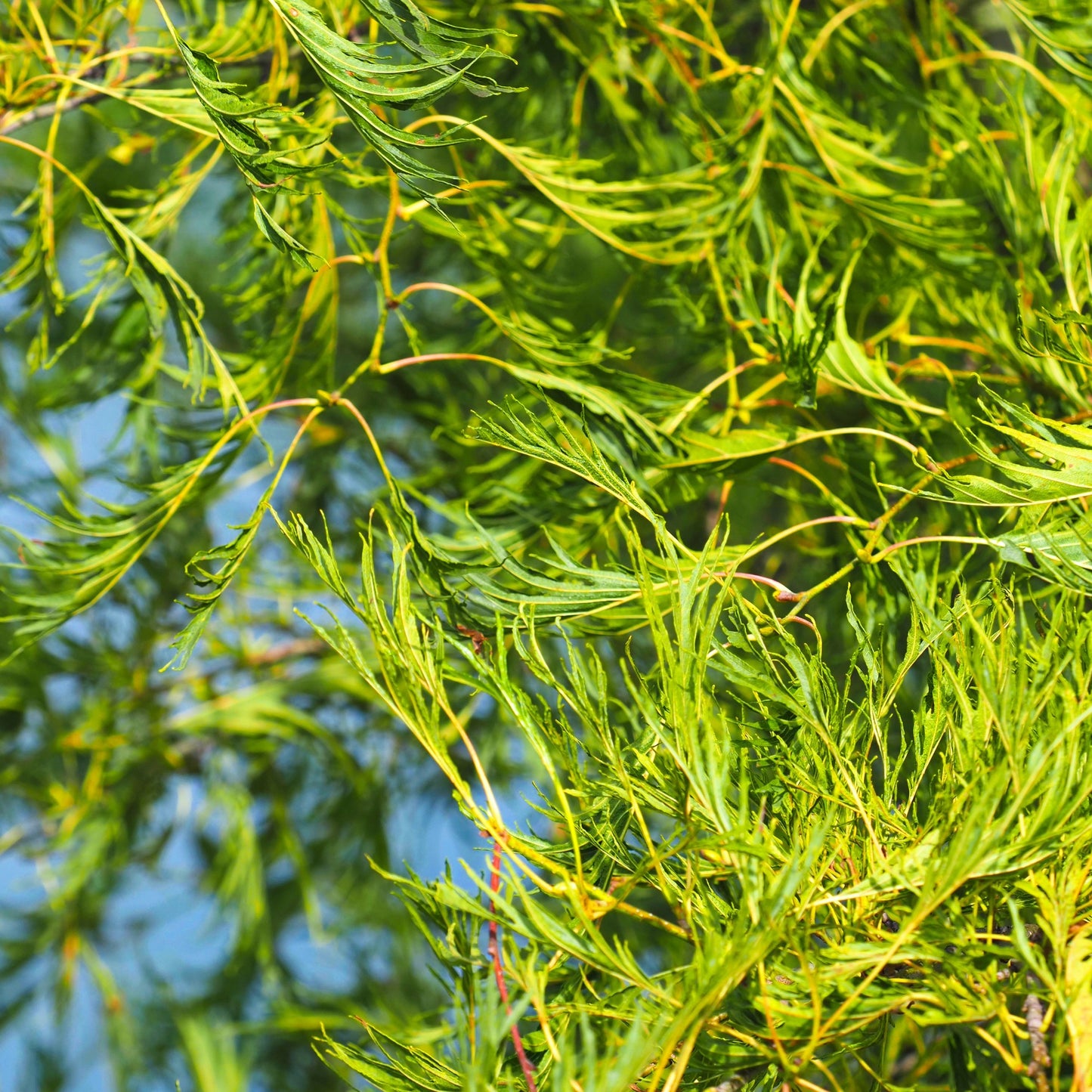
- Ultra-fine cut foliage
- Elegant pyramidal silhouette
- Thrives in wet soils
- Unique feathery texture
- Fall colour
The 'Imperialis' Alder graces the landscape with an incomparable sculptural elegance, thanks to its exceptionally fine foliage. Its deeply cut, almost laciniate leaves create an airy, misty texture reminiscent of a giant fern or a delicate Japanese maple. This graceful tree excels at transforming damp garden areas into a sophisticated visual display, while offering a sturdy structure and a calming presence throughout the seasons.
Characteristics
- Foliage: The leaves are green and deeply incised, giving the tree a feathery, delicate appearance. They remain on the tree late into the fall, often dropping while still green or slightly bronzed.
- Flowering / Fruiting / Stems: Decorative catkins appear in early spring before the leaves emerge, followed by small woody cones (strobiles) that persist through the winter, adding structural interest.
- Light: Thrives in full sun but adapts well to partial shade.
- Habit: Features an upright, pyramidal habit that maintains a graceful and well-defined silhouette as it matures.
- Growth: This cultivar is slow-growing, making it easier to integrate into managed spaces where it takes its time to establish without quickly becoming overwhelming.
- Soil: Prefers rich, cool soils. It is particularly renowned for its ability to flourish in wet or even waterlogged soils where few other trees can survive.
- Temperature: Perfectly suited for the Canadian climate, displaying excellent hardiness (Zone 3).
- Resistances: Highly resistant to White-tailed deer and hare and rabbit, as well as poorly drained soils and temporary flooding.
Use
- Types of use: Ideal as a specimen tree to highlight its unique foliage, or along water features (ponds, streams) where its roots help stabilize the bank. It also works well in woodland massings or in large containers during its early years.
- Decorative advantages: Creates a striking textural contrast when planted near large-leaved plants. Its winter silhouette, adorned with hanging mini-cones, is highly aesthetic.
Maintenance
- Watering: Keep the soil consistently moist. Water generously during dry spells, especially if the tree is not located near a natural water source.
- Fertilization: Apply a balanced fertilizer in the spring to support development, though this tree naturally fixes nitrogen in the soil.
- Pruning: Prune primarily to remove dead wood or poorly oriented branches in late winter or early spring before the sap rises.
- Planting: Install in a hole twice as wide as the root ball. Ensure a good supply of compost if the soil is poor.
- Winter Protection: No specific protection is required once established due to its high hardiness.
Plant details
Dimensions
Dimensions
Spacing
- 550 cm
Spread
400 - 500 cm
Height
600 - 800 cm
Spacing
- 215 in.
Spread
155 - 200 in.
Height
235 - 180 in.
Characteristics
Characteristics
Habit:
- Pyramidal
- Upright
Flowering colours:
- Brown
- Green
Plant needs
Plant needs
Watering:
- Tolerates wet soil
- Tolerates waterlogged soil
- Moderate
Maintenance:
- Easy
- Prune in spring
Soil requirement:
- Moist
- Rich
- Adaptable
Features
Features
Resistance:
- White-tailed deer
- Hare and rabbit
- Cold
- Disease
- Flooding
Attract:
- Birds
Use:
- Specimen
- Mass planting
- Border
Attribute:
- Slow growth
- Fall colour
- Small landscaping and lot